About the BD9250 and BD9250s GNSS receiver modules
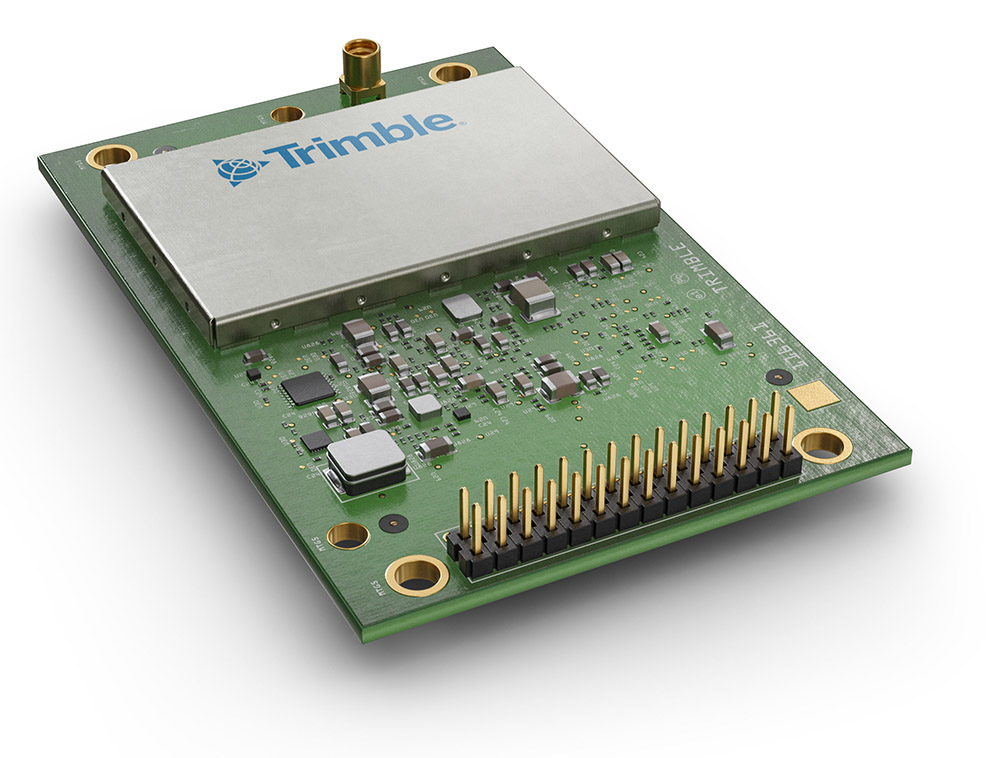 The BD9250 receiver module (also referred to as a receiver) is sold in two hardware configurations:
-
BD9250
The Trimble BD9250 receiver module is a powerful multi-constellation, dual-frequency GNSS receiver that provides very precise continuous positioning by leveraging the power of the Maxwell™ 7 processing technology. The GNSS receiver supports dual-frequency from GPS, GLONASS, BeiDou, and Galileo constellations.
-
BD9250s
The BD9250s supports the S-Band transmissions from the Indian NavIC constellation while the BD9250 supports MSS-band transmissions from Trimble RTX® and OmniSTAR® correction services. Otherwise, the receivers are identical and this Help uses the name BD9250 in reference to both.
As the numbers of satellites in the constellations grow, the BD9250 receiver module is ready to take advantage of the additional signals. This delivers the quickest and most reliable initializations for centimeter positioning. For applications that do not require centimeter-level accuracy, the BD9250 receiver module contains an advanced Kalman filter PVT engine that delivers high accuracy GNSS/DGNSS positions in the most challenging environments such as urban canyons.
With the latest Trimble Maxwell 7 technology, the BD9250 receiver module provides assurance of long-term future-proofing and trouble-free operation. Moving the industry forward, the BD9250 receiver module redefines high-performance positioning.
A variety of streamed outputs are supported. These outputs provide detailed information, including the time, position, heading, quality assurance (figure of merit) numbers, and the number of tracked satellites. The receiver also outputs a one pulse per second (1PPS) strobe signal, which lets remote devices precisely synchronize time.
Designed for reliable operation in all environments, the receiver provides a positioning interface to an office computer, external processing device, or control system.
